What is the reality in banking today? The reality in banking is we moving toward to the next normal. The banking business model of the past is clearly not the business model of the future. We are now living in the era of customer’s choice where client is king. Consumer’s choice that lead to value creation is the hottest tech industry theme right now and it’s getting more and more attention. It is what everyone is talking about in this digital age.
Technology has massively transformed industries such as entertainment, accommodation, music, and transportation. In this modern society, ‘using’ is the new owning. Companies don’t have any stock. They only have users, clients, and people.
In banking, we clearly need to see this improvement because let me tell you something: People hate banks. Data shows that seven out of ten millennial would rather visit their dentist than their local bank. The biggest weakness of banks right now is that they were built for the Industrial Revolution, they were built around paper, checks, cash, and those things are of the last century. What they need is a reality check to completely change their business to be digital and that is why we have this massive rise of a new industry called FinTech.
Integrating finance with technology– rather than finance versus technology– is starting to come together because money is just data. Think of FinTech as being the marriage of the parent-child relationship where financial services resembles the parent that just wants technologies to be resilience, stable, and secure, whereas the child is simply those who wants to challenge everything and argue everything.
They want to change the future and design a whole new world the way they like it and the way it should be.
For over a decade or so, we’ve seen thousands of startup companies doing interesting things around financial services and what’s interesting is that the breakout companies that are unicorns are founded by people who are really young, typically Gen Y or Gen X, under the age of 40.
Gen Z of teenagers are even creating new organizations and new ideas around financial services. It is just like they don’t like the system or anything but it is more about how to build a platforms that can accommodate us with the world we live in today. Take John and Patrick Collinson for instance. These two brothers from Ireland started a business called stripe in 2010 when they were 21 and 19 years old. Today, they run one of the biggest fin tech unicorns in the world valued at twenty billion dollars. Not bad for a couple of kids.
Disruption in banking is happening. It disrupt through the process. Banking is now paperless. It is contactless. The future of banking will be mobile and we all starting to sense this: how simple but how powerful number of branches have been reduced significantly at a global level.
That is why it is the technology company that does banking and it’s changing its model and is structured to be digital because they don’t want to be disrupted by the FinTech community. They want to be the disrupter and that’s a big attitude change. To sum up, to be the real disruptor as a bank, when you are a two hundred and twenty years old institution, you have got to start to change the mindset right away.
Heated discussion on how to strengthening our food security
In many countries, agriculture is considered as source of emission with a significant contribution in climate change. This is probably the reason why we should start thinking about where our food comes from (not just where it comes from but also where it won’t come from), how little there may be, and what specific food groups may be affected, and what can be done about it. In broad terms, if I am in the business of agriculture as a producer (and a consumer too), what do we need to be aware of in terms of climate change?
Climate change is anticipated as major issue that will definitely affect agriculture, and because agriculture is the main source of food production at the moment, basically we can expect food production to be affected by climate change. So food production and climate change are seems to propagates each other backward[1].
This is where food security comes in. But our concern is not so much about food security but rather is more about the insecurity for the lack of food on our dinner table. According to the FAO[2], we think about food security in four dimensions:
First off, is making sure that the food is available. Second is to make sure that it is accessible physically. Third is to make sure that it’s affordable and lastly is to make sure of its safety because those four dimension are often interlinked. In terms of availability, especially among ASEAN countries, I can say that Singapore is a very good model. Data shows that currently Singapore only produce less than 10 percent of their food and the rest comes from overseas[3]. This might sounds like Singapore will always going to be vulnerable and susceptible to how climate change affects those countries where they get their food from, but not really. As a matter of fact, the availability of food in Singapore is not just through imports, they also grow their own food, they store enough stockpiles, and they also investing overseas where direct supply chains come back to their country whenever there is an excess supply.
Singapore companies yet is the best example of government to government business arrangement. For example, take Jilin province in China[4], an area that is multiple times bigger than Singapore, is prepared for growing several various food groups (e.g. wheat, maize, sorghum, and rice) by some Singaporean companies, where the surplus can come back directly to Singapore government.
In terms of self-production, Singapore is aspire to produce a third of their nutritional needs by 2030[5]. Their goal was intended for providing an alternative protein that can be obtained not just from agriculture but also aquaculture.
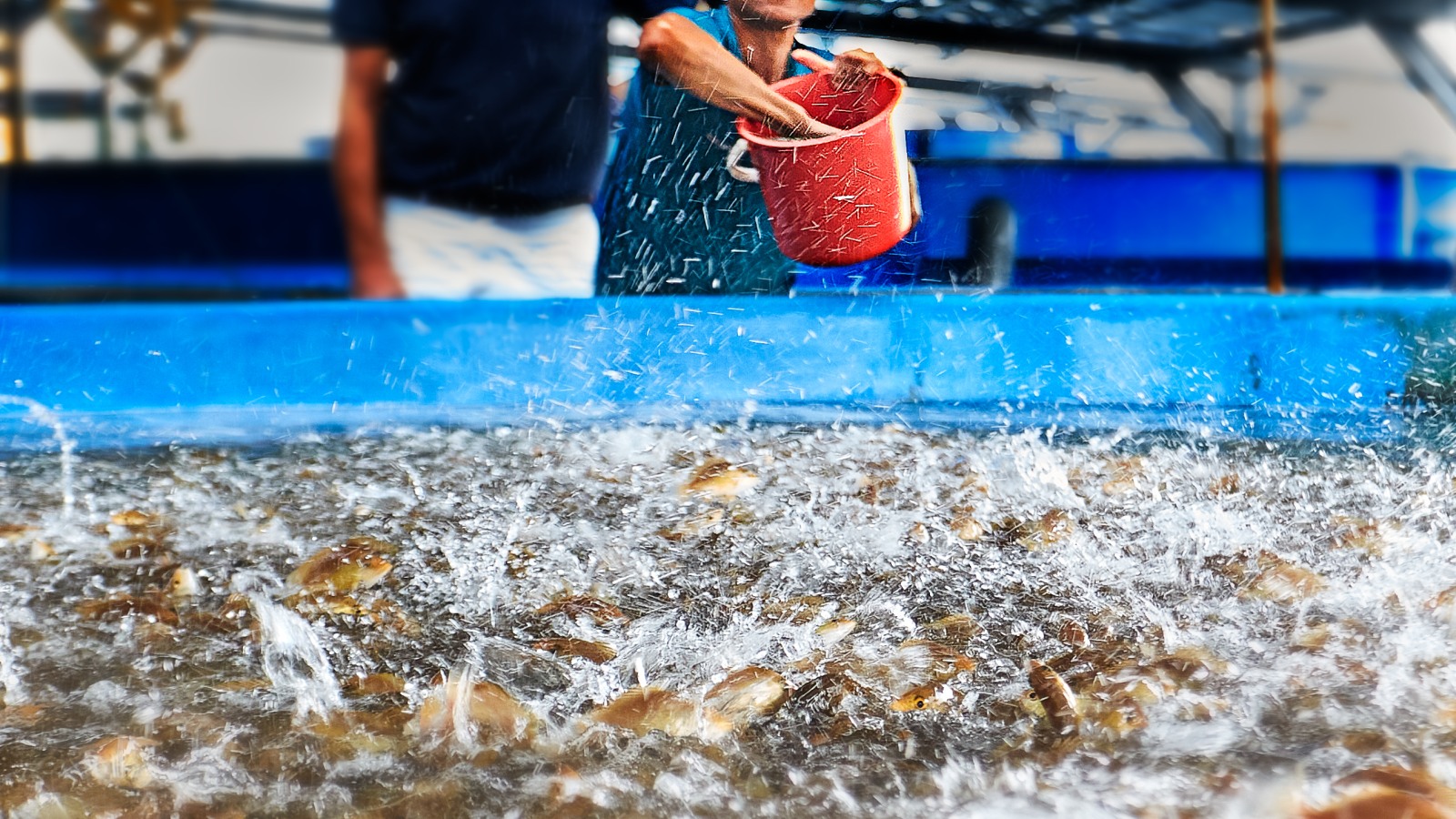
Aquaculture in Malaysia
Basically, this 30 by 30 iteration is to address the food safety standards in a sense of being very proactive. So to make food available throughout the year, Singapore government have to be very conscious to climate change. They know that the quality of food will inevitably be affected especially when climate change affects their supply lines in overseas. When it comes to supply lines in overseas, Singapore depend on about 12 major countries. Most of their food such as fresh vegetables and eggs are comes from Malaysia[6]. When climate change happens, vegetables are good example to describe the negative effects (e.g. too much rain droughts) that will definitely lessened the supply. When there are storms, a lot of fish that they harvested from Malaysia is reduced.
Two regions such as North America and South America are major sources of imports for Singapore. Several years ago, they import a lot of animal feed from the western hemisphere where there was a big drought in North America[7]. This event affect the supply of soybeans. So because of soybean shortage, prices went up so the net result is that animal feed (e.g. fish and chicken) are all affected so there’s a competition in prices that caused the price of chicken and fish go up. So we’re really living in a very interlinked world and country like Singapore were certainly very susceptible.
One of the most intriguing part about food security is that if you look at prestigious international studies and surveys[8], country like Singapore usually rank quite high and it is sort of contradictory because as a small country, which obviously imports so much of food from overseas, they’re actually doing really well in terms of food security –where in reality they don’t have the kind of land and the flexibility that other countries may possessed.
But little did we know, all these international indexes are based on a certain set of rubrics and metrics that mainly consist of affordability, availability, safety and so on. Many of these indexes are like beauty contests, especially for country like Singapore where they do very well superficially but if we look within the surface, they’re so vulnerable.
Another significant aspect to look at other than food security is household security. But as significant as it may be, the household security is not as bright as the national security were. You can have your food secure nationally but at the end of the day, it is the household level that matters. Why there’s the hungry people that really illustrates this particular point because the household security is something that we still need to spend a lot of effort on[9][10].
There is a lot of things to be done, and we still have many food insecure households who still have to fight for their food which made all of these studies about Singapore would be sounds more like a food paradise. While Singapore put this 30 by 30 ambition into motion, COVID-19 has brought up to people’s awareness as well and just by sheer natural effect of climate change supply will be more and more inconsistent–at the very least will be inconsistent if not curtailed. There are a lot of constraints for their government to fulfill this 30 by 30 dream.
As a developed country, they can tackle that sort of limitation via increasing their productivity. After all Singapore is pretty innovative society. In fact, Singapore is very technology oriented and that is why they shouldn’t think too much of their limitations like ‘land’, but instead they should think of ‘space’ and it’s already starting to happen[11]. Vertical farms is one of many innovative ideas to expand the planting dimension from one dimension to two dimensions going upwards to increase their productivity up a notch. Although, there are only certain food items that can grow in Singapore right now.
Thus, having this innovative technology at their disposal, the question is no longer about is it possible for Singapore to even grow certain food like rice or wheat anymore but is more about at what cost?
While cost is a very important factor, but at the end of the day Singaporeans need to start thinking about paying a bit more for their food. It’s inevitable that food prices will go up not just because of climate change as they surrounded by so many other countries. If they continue importing and there’s no supply chain interruption, they can expect to import food that is cheaper than what it cost them to produce locally.
If Singapore continue the supply lines from outside, even if they’re successful in 30 by 30 but the other 70 will still be imported so the next question is how do Singapore become price competitive with the imports?
Productivity, Productivity, Productivity
First of all, they need to keep focusing on technology to increase productivity. They need to be prepare to go back to public outreach with a public mindset. They have to be ready to pay a bit more for food that they produce locally. When push comes to shove, the battle against shortages will be inevitable. Thus, if they’re not support their local farmers then in time for crisis they will be very vulnerable and exposed overseas.
Quality Assurance
Secondly, like it or not, it all comes down to cost. The ideal public mindset will be the mentality that people are willing to pay a little bit more for the assurance of the quality they get (e.g. meat, vegetables, etc.). They need to make sure that the quality of their local products are higher than the rest of ASEAN. But is there enough awareness among Singaporean that their product is different and will they be willing to pay a little bit more for that?
Educating the future generation
Singapore government may have already campaigned a lot more public outreach in a form of public education programs such as eating habit, food waste, and so on[12]. But advertising is about repeating the message consistently and repeatedly. It is very encouraging that we’re seeing some of these messages being given at the school level among ASEAN countries and as an educator myself, I personally believe that the younger generation is the perfect audience to start making a difference, not just for food awareness but also on food waste.
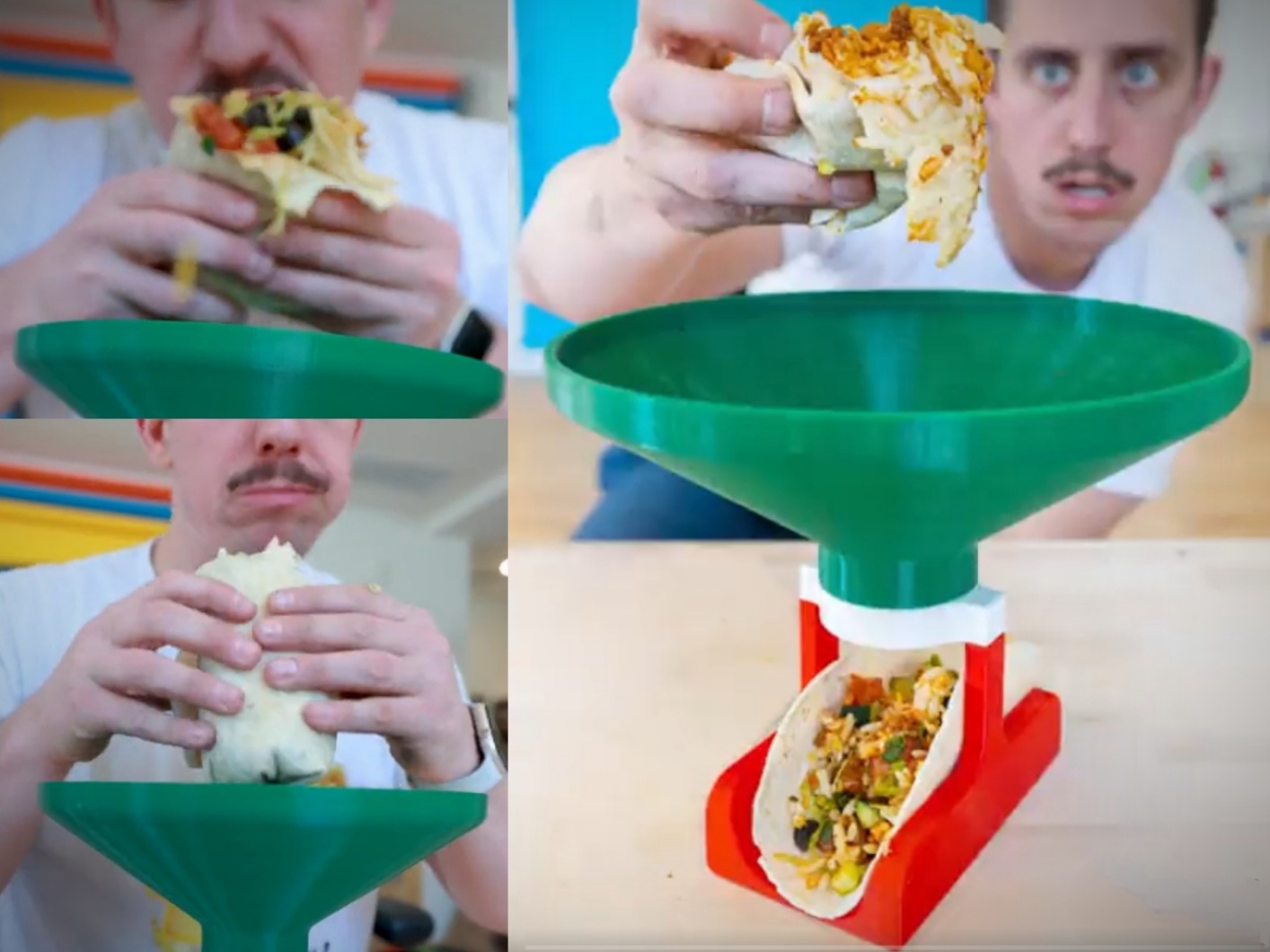
Hilarious food funnel burritos!
Price barrier
Studies have shown that there’s a sort of a price barrier that the consumers are willing to bear in the substitute for quality which around 10-12 percent and anything beyond that will make the consumers suffer. But again the main concern is always about the mass market where you need to feed the majority of people and this is where the price sensitivity is all time high. Although at the same time, there will always be parts of our population who are looking for niche products or willing to pay much more for organic food, super food and so on.
If we think about consumer eating habits, such as beef that has its own climate impacts as well, it could also complicates food supply and a lot of consumers don’t really appreciate the fact that eating more animal protein has such big negative impacts on the environment. Instead of value, most people don’t think beyond just the price unfortunately. Little did they know that in order to produce one kilo of beef requires 16.000 kilos of water[13]. Thus, if you start eating something else that has a lower water footprint, you’re really doing a tremendous job in terms of helping the environment. Our fresh water resources are declining rapidly all over the world especially in the ASEAN region and the same goes without feeding protein the other animals.
The conversion ratios in animal protein sometimes are very inefficient, so why not eat more vegetable type protein instead of getting it from animal, which are essentially just converting your vegetable protein into animal protein? Be that as it may, food is viewed as such a personal thing for most people and it is strongly influenced by our legacy mindsets.
In addition to shifting our public mindset, there are some things to be considered both from a perspective of food security as well as climate change related, apropos dealing with the environmental water footprint problem such as:
Food waste. First of all is by reducing food waste because that is a major concern. Take Singapore for instance. Even for a small country they do waste a lot of food.
Second is asking ourselves: Do we need to eat as much as we’re eating? Because this will linked to food waste. As a human, pretty often we tend to overeat and that also creates another kind of problem such as obesity, diabetic, and so on.
Thirdly is asking ourselves: Do we need to eat as much animal protein as we do today? Can we all be more ‘flexitarian’ and consciously try to at least reducing our footprint by 10 percent or more? Imagine if more people feel this way. Wouldn’t every individual effort adds up and makes a difference?
Conclusion
If we take ASEAN countries as the miniature scale of the world, the modern supply chains are all about responding to what the consumer want. For example, in every local supermarkets they try to anticipate what consumers want. So they responded to demand and then they get the supplier and then they go backwards. They work backwards through the supply chain and then the farmers respond by growing what the supermarkets want. From this we can see that consumers can have a very big role in affecting the supply chain. Take Singapore for instance, for a country that has relatively high household income and who can actually afford to eat expensive stuff, the demand for sustainably produced food has increased. All these are really good harbingers of the future.
As a country, we need to ensure that household are resilient to food insecurity. Countries like India, will be a good example. They have got laws that show that every household, however you are, will gets a minimum support of food[14]. It doesn’t have to be like that but this kind of thing is so fundamental and certainly we need to see how we can develop more households for this kind of security.
Besides, it is an existential thing that we all have to eat.
From the depth of the jungles where it got me to know more of this republic. Got to know the villages, the children, and the oceans of Indonesia. Oh, those pulchritude destinations of Raja Ampat and Gili Trawangan. The forest provides a source of alacrity to millions of Indonesians. It also got me to know Indonesia’s dying forests which were now at stake and waiting to be resuscitate.
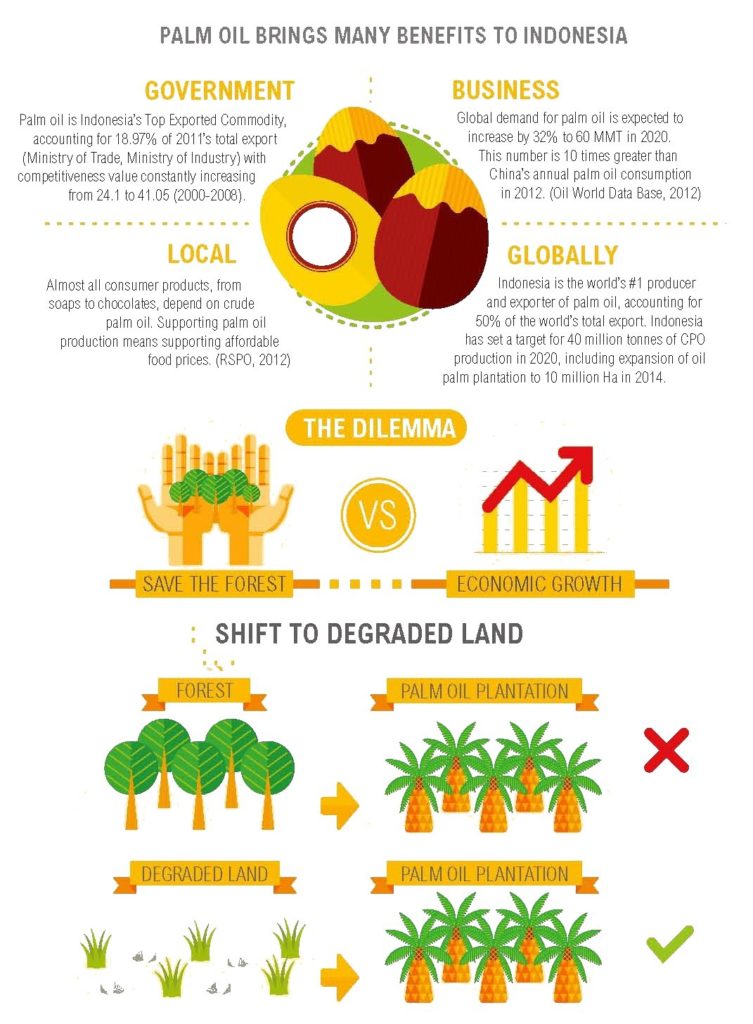
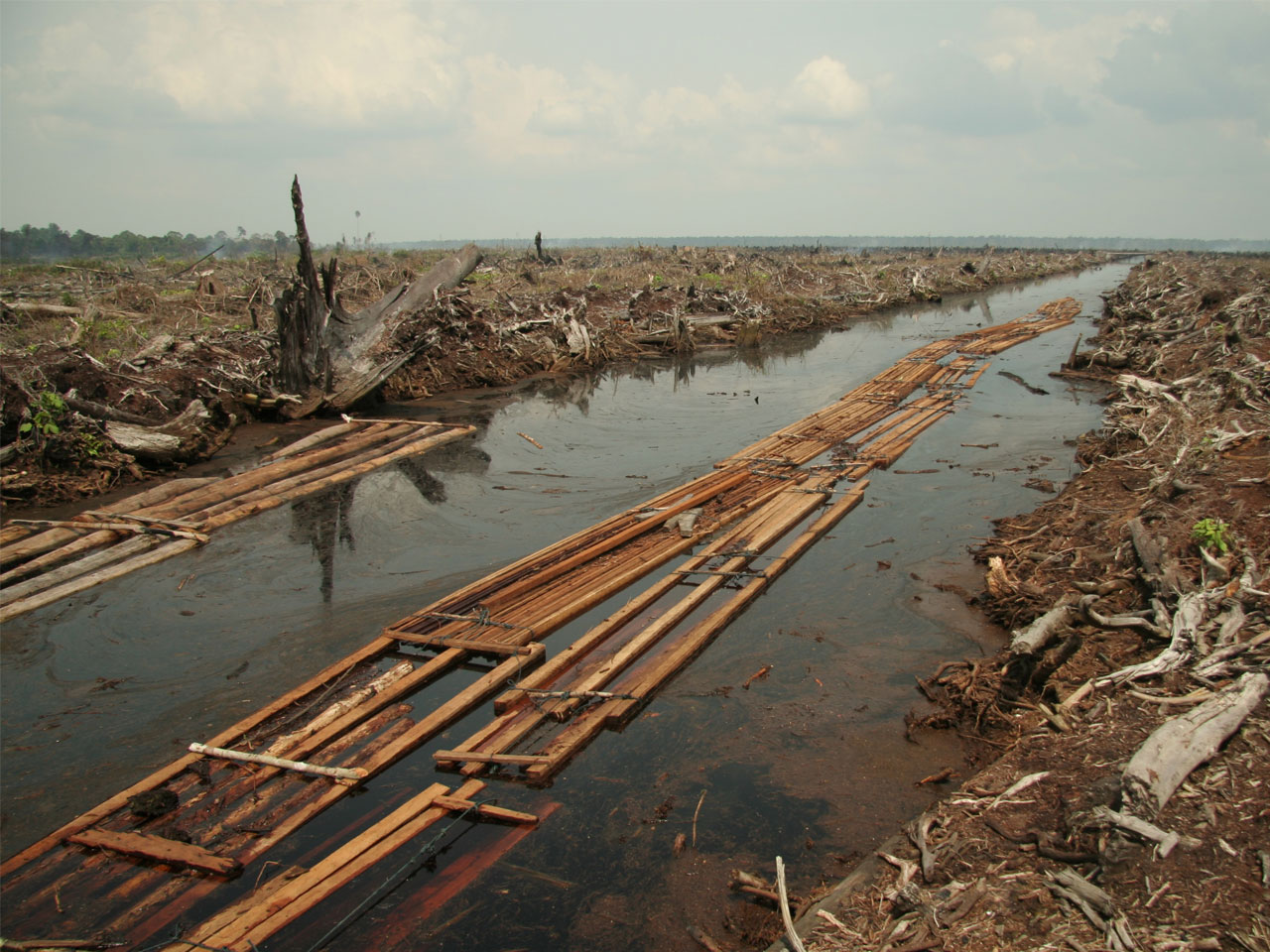
Although in some places our forests are looks perfectly fine, but I’m here to tell you that our forest is starting to be annihilated, our logs been stolen and taken out of this country. In another place, it’s opened for palm plantations for bio fuel and others. Since the 1970s, a storm of deforestation has swept through the country. Huge amount of forest land are crushed down to make space for palm oil plantations.
Social Investment
A wise man once said that one honest voice could be louder than a crowd. This statement seems intelligible at first until it is not. When it comes to contribution, it is not about what we have, it is about what we give. But sadly, most of us are not big on relinquishing. Therefore, people invented crowdsourcing.
At present, crowdsourcing is firmly ingrained in both our societies and our economies. It is the epitome of contribution. Early digital platform that essentially a user based encyclopedia like Wikipedia that crowdsources facts, or Quora and Waze that crowdsources answers and navigation respectively, proved that the community-driven model was given credence to the idea that crowds are more tangible than individuals are. This makes me wonder, why can’t we do the same for our forest? Why don’t we start a “Community Logging” where we could all take part in preventing our ecosystem from extinction? In the face of our current forest land adversity, it’s easy to give up hope. But I am just curious: What if?
The negative effect of deforestation
What If?
The way I envisioned this “Community Logging” is simply as a social investment for empowering the indigenous and local community such as ex-illegal loggers.
Although it might looks suspicious for them at first, what if we can infiltrate their hearts and minds. What if we can make them laughing with us and hopefully they join us. People said that the early adopters are usually the old ones; they could’ve decided to join because they getting older and can no longer carry stolen logs or simply because they want to. Either way that’s fine! Let’s start with this old fellow. What if we can change this old fellow’s life and soon begin to expand with a few interested families and encourage them to working together for a more sustainable reforestation?
The important thing is profess. Our aim is to reforest this land. But of course, we need to figure out a way to do this. So what if we can follow these simple steps: Firstly, we inventoried all of their forests. This includes collecting data on how big is the diameter, how tall they are. We must turns everything into data such that every log has a number.
Secondly, we signifies forest ownership to shows which person owns which log, where did they lives, they cooperative id number and so on. That way we can track back every single wood there through our database.
Lastly, unlike the old “cut 10 trees down then plan 1 tree”, the idea is to reverse it into: after we cut 1 tree down, we will plant 10 trees immediately to guarantee the viability of the forest ecosystem.
I believe that this will work because of the experience of Sweden. A community logging started in 1939 called The SODRA of Sweden, owned by 50,000 farmers. They work through a cooperative. Now it has grown amazingly. SODRA has plenty of members and its net-sales is around US$ 2.5 Billion. And, same as ours, SODRA is one of the largest producers of pulp in the world. But unlike ours, there’s zero of protests against their activities, because its 100% sustainable. It also produces bio fuel that generates several terra watts worth of electricity per year only with wooden logs. Which bring us to another ‘what if’ in this article: What if we can replicate their success?
Moreover, the replication of this social investment will scale with the help of technology such as mobile app. Imagine if we can democratize trees plantation, how monumental would that be?
Other than that, we can be the pioneers of Zero Carbon Footprint Communities. According to research, the average carbon footprint per person in Indonesia is 1.8 tons per year. While the carbon absorption rate is 200 Kg per tree per year. This means, we can absorb our own carbons. If you plant 9 trees, you can say, “Hi everybody, I have a zero carbon footprint! Because all the carbons I’ve emitted have been absorbed by the 9 trees I’ve planted in this village”.
In the future and when it can scale as expected, there will be a profit sharing scheme and everybody will benefit from that.
Picture this when you’re waiting in line for an Avengers movie ticket and goes, “How boring, let me just plant a tree real quick”. Two seconds later, an email come to you and says that your tree has been planted by this family, here are their contacts person and the coordinates. It’s Saturday night, and your partner is taking a long time to get ready, “hmmm, I feel like planting another tree!” It’s Monday morning, and you’re stuck in traffic, “I think I’ll plant some more trees!”.
What if, just what if we can plant trees with that kind of technology? Imagine how rapid the reforestation progress in Indonesia. So I think friends, let’s reforest Indonesia with our own strength and let’s make Indonesia green again!